
The host brand first. IVVOA beside it.
A charging network is built on somebody else’s ground: a forecourt, a car park, a hotel drive, a residential garage. IVVOA brings the charger, the operation and the numbers; the host keeps its name in front. This page says what a host receives, what we need from a site, and what the screens offer a brand.
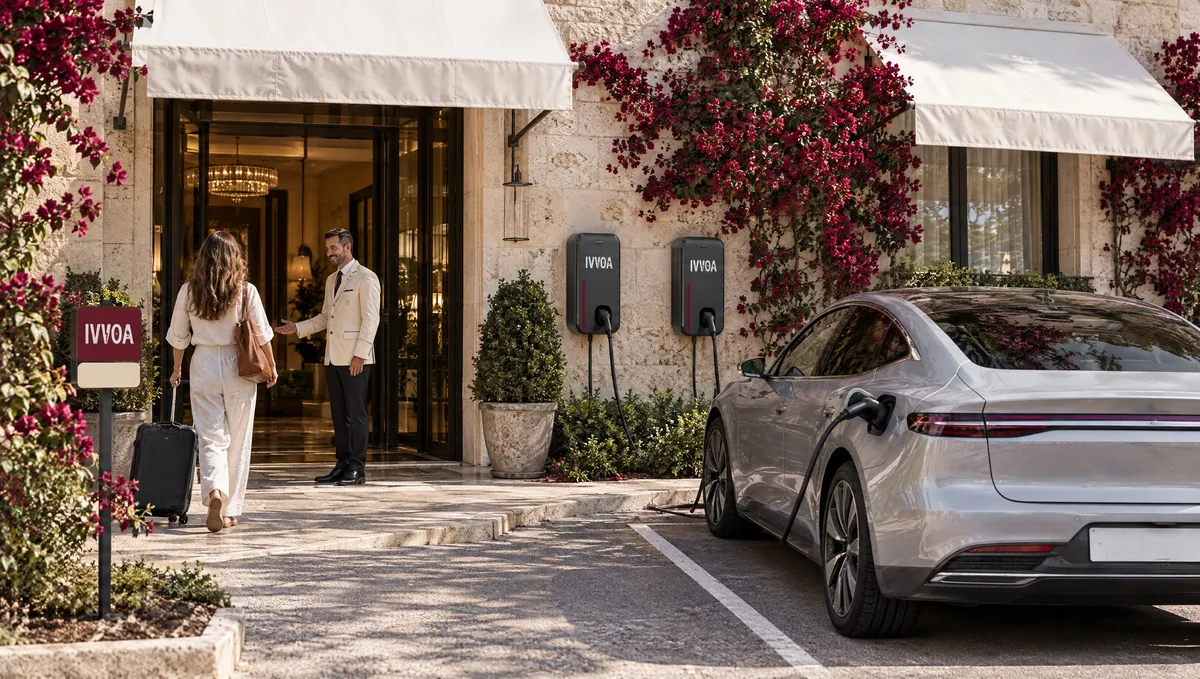
Charging that brings people and keeps them.
A forecourt has drivers who stop anyway. A shopping center has visitors who stay for an hour or two. A hotel has guests who stay the night. A residential garage has cars that rest all night. Each is a host with the two things a charger needs, parking and people who stay, and most lack a way to turn electric traffic into value of their own, and an operator they would trust to run it on their ground.
Five things, in writing.
- Their name first
- The host’s name leads at its own site; IVVOA stands beside it, small and precise.
- People who stay longer
- An hour at the charger is an hour in the café, the shop or the lobby. Charging becomes a reason to choose the host, and a reason to stay.
- Their own numbers
- A portal that shows the host its sessions, energy and visits, so that the value of the site can be seen rather than assumed.
- Nothing to run
- IVVOA designs, installs, operates and maintains, and answers to the driver when something goes wrong.
- Clean energy they can show
- Solar on the roof or canopy where the site allows, and renewable sourcing where it does not, reported rather than claimed.
A site is a conversation about four things.
- Place
- Where the site is and what is around it: a highway or a major road for a Hub, a shop, a lobby or a campus for the others, and the services that make a stop worth choosing.
- Room
- How many bays could carry a charger, whether a canopy could stand over them, and whether people can reach the site at any hour.
- Power
- What grid connection exists today. We survey the rest.
- Stay
- How long people actually stay. It decides the format: high power DC for twenty minutes, AC for hours, Spark for two wheels.
Four steps, one contact.
01
Write
One message to Connect@IVVOA.com with “Partner” in the subject line, the place, the room and the stay. A person answers.
02
Survey
We walk the site with you, check the grid connection and propose the format, the layout and the solar that fits.
03
Agree
Terms in writing: who provides what, the host’s name beside ours, the reporting you receive, and the standard we hold the site to.
04
Open
IVVOA builds, commissions and operates. Your site appears in the app, your guests find it, and you see the numbers.
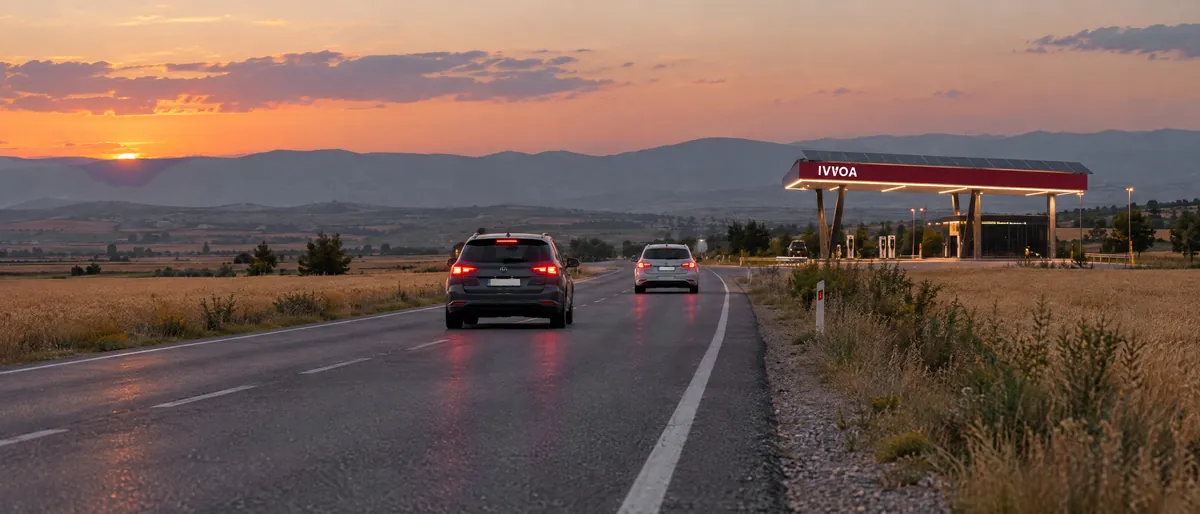
A visible, clean, honest network, and research shared in the public interest.
For a municipality, in any province: a charging presence residents can depend on, a public space worth stopping in, Spark rails on the promenades and at the transit stops where two wheelers already wait, and the IVVOA Institute’s research, training and convening in the public interest, under guarantees of independence that are written down. For a university or a hospital: AC for the cars that rest all day, Spark docks under solar for the bicycles and scooters, the institution’s own name leading on its buildings, and a training ground for the installers, technicians and officers the sector is short of.
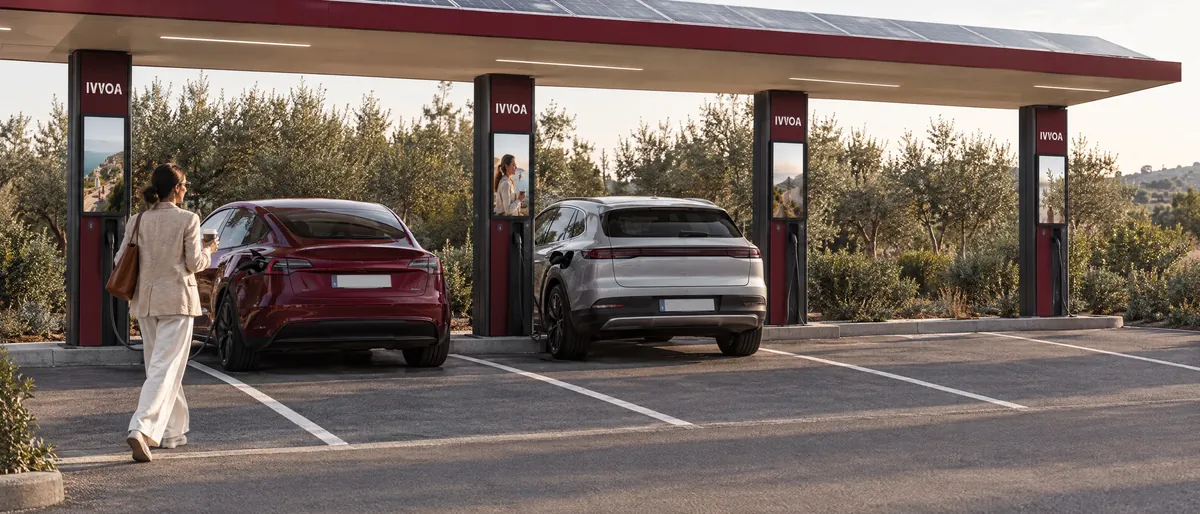
An audience that is real, present and measured.
A person standing beside a car for a while, at a known place and time, phone in hand, with a known reason to be there. IVVOA Media sells four things: the screen on every charger that carries one, earning whether or not a car is plugged in; the app, on the device in the driver’s hand, where an offer can be redeemed rather than merely seen; the place, branding and naming at a site, so that a sponsor becomes part of the architecture; and sponsored charging, where a brand funds the complimentary allowance itself and the driver is told who gave it. Verified sessions rather than estimated passes: how many people, for how long, where, when, and how many acted, all of it aggregated, never by name. Local businesses and hospitality first, then institutions and hosts, then national brands when there is a network worth buying.
Four rules.
- No political advertising
- Public infrastructure that everybody uses is no place to take sides.
- Nothing that contradicts the mission
- A network built on a clean energy argument cannot carry advertising that undermines it.
- Nothing that degrades the site
- Volume, brightness, frequency and repetition are held to the standard of the architecture.
- No editorial control over the Institute
- Media may produce for it and sell sponsorship around it, never decide what it finds.
Tell us what you have in mind.
One address. Put “Partner” or “Advertise” in the subject line and a person will answer.