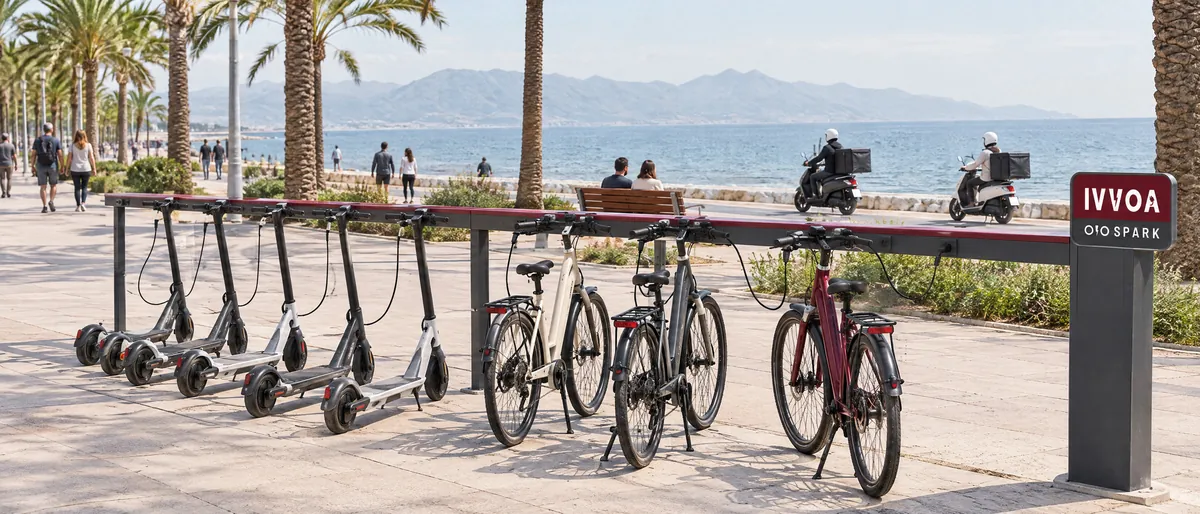
When we began planning IVVOA, two wheelers were not in the plan. We were thinking about cars, about highways, about the Hub. Then we looked at what actually moves through a Turkish city at eight in the morning. The courier with a box on the back. The student on a scooter. The shopkeeper on a moped. The family on a motorcycle in a coastal town.
Spark is our answer. It is not a side project and not a smaller version of what we do for cars. It is a network designed around a different vehicle and a different habit: a small battery, a short trip, a stop measured in hours of work or study rather than kilometers of highway. A bicycle or kick scooter carries about half a kilowatt-hour of battery, a moped about two, a motorcycle between four and fifteen; a car carries about sixty. What a two wheeler needs from a public point is not power but place: a safe, weatherproof, metered socket where it already stops, with somewhere to lock the vehicle while it charges.
Spark carries the same promise as everything IVVOA builds: the rate shown before you plug in, an allowance stated in kilowatt-hours, clean energy you can see, and a point that works when you arrive. The allowance in kilowatt-hours matters more for two wheelers than for anyone. A time based offer would be worth very different amounts to a scooter and to a car. An energy based one is fair to both.